A deck in Southwest Washington spends most of the year wet. Between our rainy season, morning dew, and the tree cover common on Clark County lots, a decking surface here rarely gets the multi-day dry stretches that decks in drier climates take for granted. That reality — not appearance alone — should drive the material decision.
None of the common decking materials are immune to moisture; each manages it differently, with different maintenance schedules, lifespans, and failure modes. This guide compares pressure-treated lumber, cedar, and composite/PVC decking specifically for our marine climate, plus the hardware and fastener choices that matter as much as the boards themselves.
Pressure-treated lumber
- Lowest material cost of the common decking options.
- Chemically treated for above-ground and ground-contact decay resistance.
- Widely available and easy to source replacement boards.
Trade-offs
- Needs regular cleaning and re-sealing to shed water effectively.
- Prone to checking, cupping, and splintering as it cycles wet and dry.
- Shortest realistic service life of the three without diligent maintenance.
Cedar
- Naturally decay- and insect-resistant heartwood, with a warmer look than treated lumber.
- Takes stain and oil finishes well for homeowners who want a wood look.
- Lighter and easier to work with than many treated products.
Trade-offs
- Softer wood that dents and wears faster underfoot.
- Needs the same ongoing sealing and cleaning as treated lumber to resist our moisture.
- Higher material cost than standard pressure-treated boards.
Composite / capped-polymer decking
- Engineered to resist moisture absorption, so it doesn't rot, cup, or splinter like wood.
- No sealing or staining — cleaning is the extent of routine maintenance.
- Longer manufacturer warranties than any wood decking option.
Trade-offs
- Highest material cost up front.
- Can still develop surface mold or algae in shaded, damp spots without cleaning.
- Heavier than wood, which factors into framing design on some layouts.
The decking material gets the attention, but the fasteners and connectors underneath do the structural work — and in our climate, the wrong hardware fails long before the boards do. Every screw, joist hanger, and structural connector on a deck exposed to Pacific Northwest rain needs a corrosion-resistant rating suited to the wood treatment it's fastened to; mismatched or bargain-grade steel corrodes, stains the decking, and weakens connections well before the visible surface shows any wear.
Ledger flashing, post bases that keep wood off standing water, and joist tape that seals the tops of framing members from trapped moisture are the details that separate a deck built for a dry climate from one built for ours. None of it is visible once the project is finished, which is exactly why it's worth confirming before the boards go down.
This is also where we see the most corner-cutting on lower-bid deck proposals — hardware and flashing details rarely show up on a materials list the way decking boards do, so a bid that looks competitive on price can be quietly skipping the connections that actually determine how long the structure lasts in our climate. We include hardware and flashing specifics in every written proposal so there's nothing hidden in the comparison.
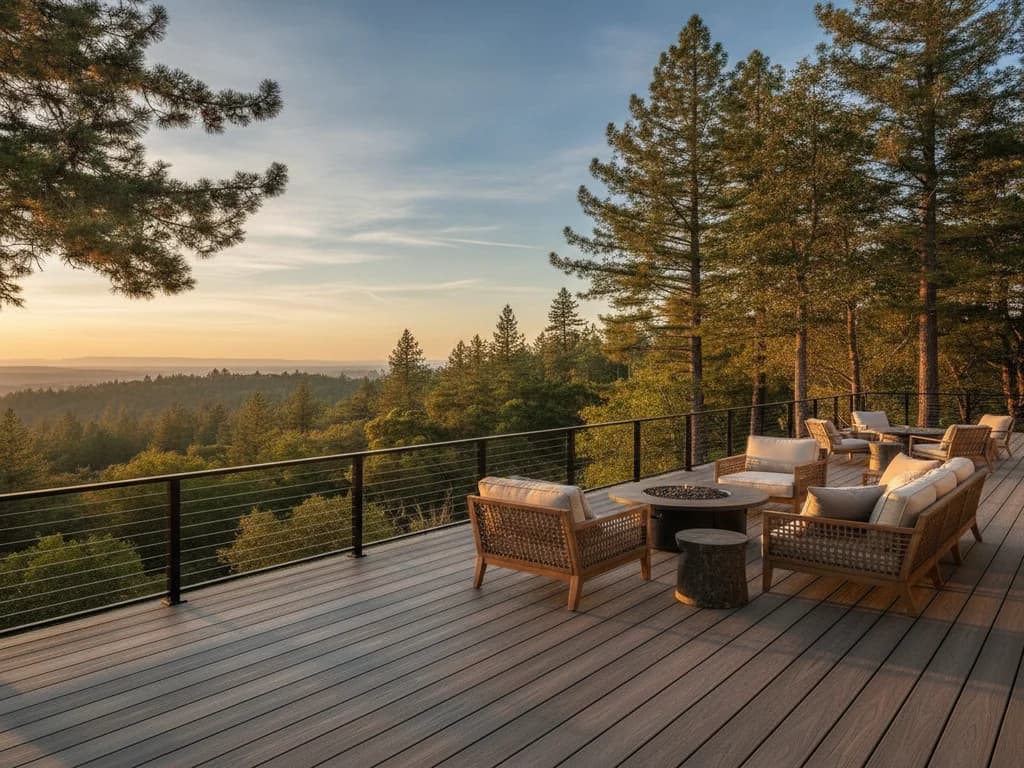
A deck's exposure matters as much as its material. North-facing decks and any surface shaded by mature trees — common across wooded Clark County lots — dry out far more slowly after rain than a sun-exposed south or west deck, which means more moss, algae, and surface mildew regardless of what the boards are made of.
Composite decking resists rot in those conditions but still needs periodic cleaning to keep organic growth from making the surface slick. Wood decking in heavy shade needs a more aggressive cleaning and resealing schedule than the same product in full sun. If your lot is heavily treed, that's worth factoring into the material decision up front, not discovering after the first slippery winter.
Gap spacing between boards also plays into how well a deck sheds water and debris in a heavily treed yard. Boards spaced too tightly trap falling leaves and needles between them, holding moisture against the joists below even after the surface itself looks dry. We size board spacing with your lot's actual tree cover in mind, not a one-size-fits-all default.
A shaded, north-facing deck and a sun-exposed deck of the same material can need very different maintenance schedules in Southwest Washington — we factor your lot's actual exposure into the material recommendation, not just the floor plan.