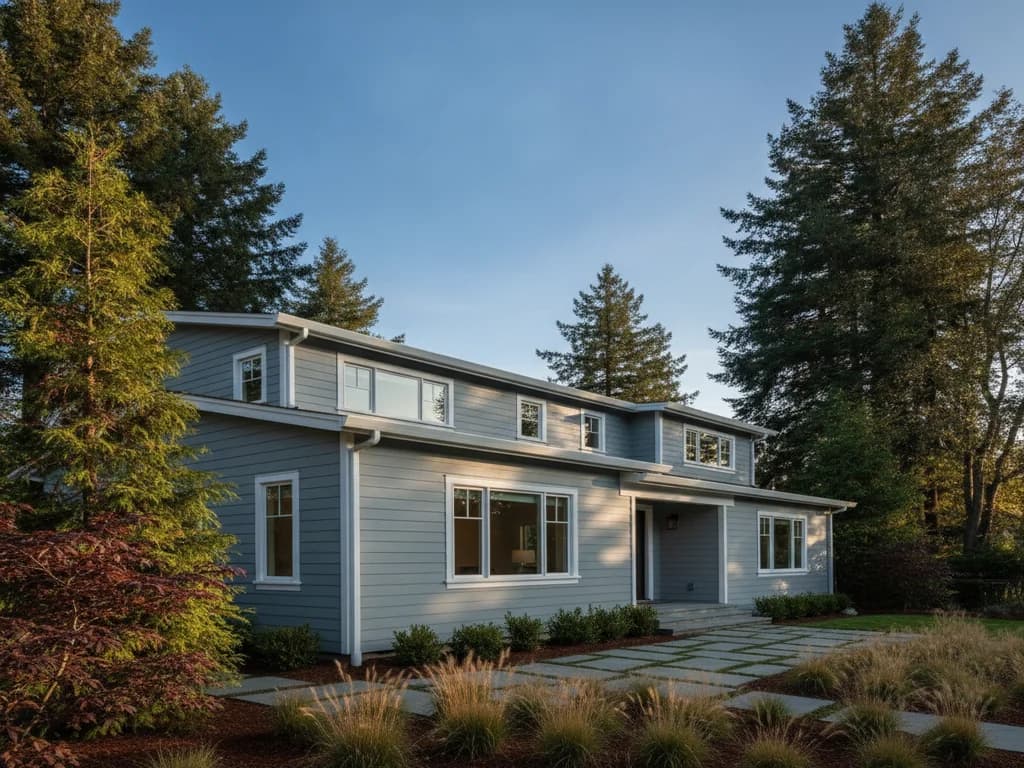
Dry Rot & Siding Repair in Southwest Washington
In a climate that sees months of steady rain every year, dry rot and water intrusion are the single most common structural issue we're called out for. Soft trim, staining siding, or a spongy spot near a deck ledger usually means water has been getting behind the cladding for a while. Our team traces the moisture back to its actual source — failed flashing, a missing rain-screen gap, a leaking deck ledger connection — repairs the damaged sheathing and framing underneath, and rebuilds the exterior so the same failure doesn't happen again.
In Southwest Washington, water is the thing every exterior has to survive. When flashing, trim, or siding lets moisture into the wall, it finds the sheathing and framing and quietly turns them to dry rot — often years before anyone sees it. We find where the water is getting in, repair the structure, and re-side with proper drainage behind the cladding. That work overlaps closely with our siding installation, James Hardie fiber cement, and deck waterproofing, so it is often folded into a broader exterior remodeling project.
- Moisture-source investigation before any repair begins
- Dry-rot and water-damaged sheathing and framing repair
- Rain-screen re-siding to let the wall drain and dry
- Flashing correction at windows, doors, and roof-to-wall intersections
- Deck-ledger flashing and connection repair (a common leak point)
- Siding, trim, and fascia replacement over repaired framing
- Structural-grade lumber and moisture-resistant sheathing replacement
- Soffit vent correction to reduce attic and eave moisture
- Localized spot repair or full wall-section reconstruction
- Documentation of repairs and photos of what was found
Rot rarely starts in the middle of a wall — it starts at the details where water is supposed to be managed and isn't. We check these first.
Roof–Wall Intersections
Missing kickout flashing where a roof meets a wall dumps runoff straight behind the siding — one of the most common and destructive leak points.
Window & Door Openings
Failed head flashing and unsealed sills let water into the rough opening, where it wicks into the framing below.
Deck Ledgers
A deck bolted to the house without proper flashing channels water into the band joist. We correct the ledger as part of the repair.
Butt Joints & Penetrations
Face-nailed siding, open butt joints, and unsealed pipe or vent penetrations give wind-driven rain a way in.
Trim & Corners
End-grain at trim, fascia, and corner boards drinks water fast when it isn't back-primed and flashed. It's often the first thing to go soft.
Grade & Splashback
Siding that sits too close to grade or hardscape stays wet from splashback and rising moisture, rotting from the bottom up.
Get Your Free Rot & Siding Assessment
A free in-home evaluation across Southwest Washington — we find the water source and give you a prioritized, written plan to stop it.
Moisture Investigation
We start by finding the actual water source — not just the visible damage. That means tracing flashing, siding laps, deck-ledger connections, and grade/drainage around the foundation before we scope any repair.
Open-Up & Assessment
We open the affected wall or trim area to see the full extent of the rot and confirm how far it's spread through the sheathing and framing, then document what we find with photos before pricing the repair.
Structural Repair
Damaged framing and sheathing are cut back to sound wood and replaced with new, properly protected lumber. We don't patch over rot — anything soft or compromised comes out.
Correct the Moisture Path
We install proper flashing, a rain-screen gap, and correct drainage detailing at the source of the original leak, so the rebuilt wall doesn't fail the same way again.
Re-Siding & Finish
New siding, trim, and paint or stain finish the repair to match the surrounding exterior, and we walk the completed work with you.
How we trace a leak to its source, why a rain screen changes everything in this climate, and an honest account of what repair can and can't save.
We Fix the Water Source, Not Just the Symptom
We want to be clear up front: replacing rotted siding without correcting why it rotted is a temporary fix. The new boards will fail the same way, on the same schedule, because the water is still getting in at the same place. That is not the work we do.
Our first job is diagnosis — finding the flashing, joint, or detail that let moisture reach the structure. Only then do we open up, dry out, and repair the sheathing and framing, correct the source, and re-side with drainage behind the cladding. The goal is a wall that stays dry the next time it rains, not just one that looks new for a season.
Why a Rain Screen Matters in the Pacific Northwest
A rain screen is a drained, vented gap between the siding and the weather-resistive barrier behind it. Any water that gets past the cladding drains down and out, and air movement lets the wall dry. In a climate as wet as ours, that drying capacity is the difference between a wall that shrugs off rain and one that slowly rots.
When we re-side after a rot repair, we build the wall back better than it started — proper weather-resistive barrier, flashing that laps the right way, and a rain-screen gap where the system calls for it. It is the same building-science approach the U.S. Department of Energy's Building America program documents for durable walls.
What Repair Can Save — and When It's a Re-Side
Sometimes the damage is localized: a bad window flashing rotted the sheathing below one opening, and a targeted repair plus corrected flashing solves it. Other times, once we open up, we find the water has been getting in at many points for years and the whole elevation — or the whole house — is compromised. We'll show you what we find and be straight about which situation you're in.
When the damage is widespread, a full whole-home exterior re-side is often the better value than chasing rot patch by patch — you correct every detail at once and reset the building envelope for decades.
How do I know if I have dry rot?
Common signs are soft or spongy trim and siding, paint that's bubbling or peeling in one spot, a musty smell near an exterior wall, or discoloration around a window, deck ledger, or roofline. Dry rot often starts hidden behind siding, so by the time it's visible from outside it's usually been developing for a while. If you're seeing any of these signs, it's worth having it assessed before it spreads further.
What usually causes dry rot in Southwest Washington homes?
Almost always a failure somewhere in the moisture path — missing or corroded flashing, siding installed without a rain-screen gap so it traps water against the sheathing, a deck ledger that was never properly flashed where it meets the house, or a soffit vent that lets moisture build up in an eave. Our long, wet season means any one of those gaps has months to do damage every year.
Do you just patch the damaged area, or fix what caused it?
Both, and in that order — we can't do one without the other. Rebuilding a rotted wall without correcting the flashing or drainage that let water in just sets up the same failure again. Every repair includes finding and correcting the actual moisture source, not just replacing the wood you can see.
Is dry rot repair urgent, or can it wait?
It's worth addressing promptly. Dry rot spreads as long as the moisture source stays active, and what starts as a soft trim board can migrate into structural framing, sheathing, and eventually the wall's ability to carry load. Catching it early is almost always a smaller, less invasive repair than waiting.
Can this be done alongside a re-side or deck project?
Yes, and it often should be. A re-side is the natural time to correct flashing and add a rain-screen gap across the whole wall; a deck rebuild is the time to properly flash the ledger connection. We coordinate rot repair with those projects so you're not paying to open the same wall twice.
How do I know if I have dry rot behind my siding?
The warning signs are soft or spongy trim, paint that blisters or peels in the same spot each year, dark staining below windows or at deck ledgers, and siding that sounds hollow or crumbles at the corners. In our marine climate, water most often gets in at failed flashing, butt joints, and penetrations, then spreads through the sheathing out of sight. We open up a small area to confirm the extent before we quote anything — we don't guess at what's behind the wall.
Will you just replace the rotten boards, or fix why it rotted?
Both — and the second part is what actually matters. Replacing rotted siding without correcting the water source just resets the clock on the same failure. We trace the moisture back to its source (flashing, kickout at roof-wall intersections, deck ledgers, window heads, grade), correct it, dry and repair the structure, and re-side with proper drainage behind the cladding so the wall can shed and dry the next time it gets wet.
What is a rain screen, and why does it matter here?
A rain screen is a drained-and-vented gap between the siding and the weather-resistive barrier. It lets any water that gets past the cladding drain out and lets the wall dry, instead of trapping moisture against the sheathing. In the wet Pacific Northwest it is one of the highest-value details we install, and it is why modern fiber cement and engineered-wood systems hold up so much better than the face-nailed siding they replace.
We provide dry rot & siding repair to homeowners across the Vancouver metro, Clark County, the Columbia River Gorge, and the Lewis River and Cowlitz County corridor. Each community has its own dedicated page with local permitting, climate, and project detail — and each regional hub covers the surrounding areas we also serve.
The following government agencies, industry organizations, and official resources provide additional information relevant to your remodeling project.
Ready to Start Your Remodeling Project?
Get a free, no-obligation estimate from Southwest Washington's remodeling and exterior specialists. Licensed, insured, and ready to build.