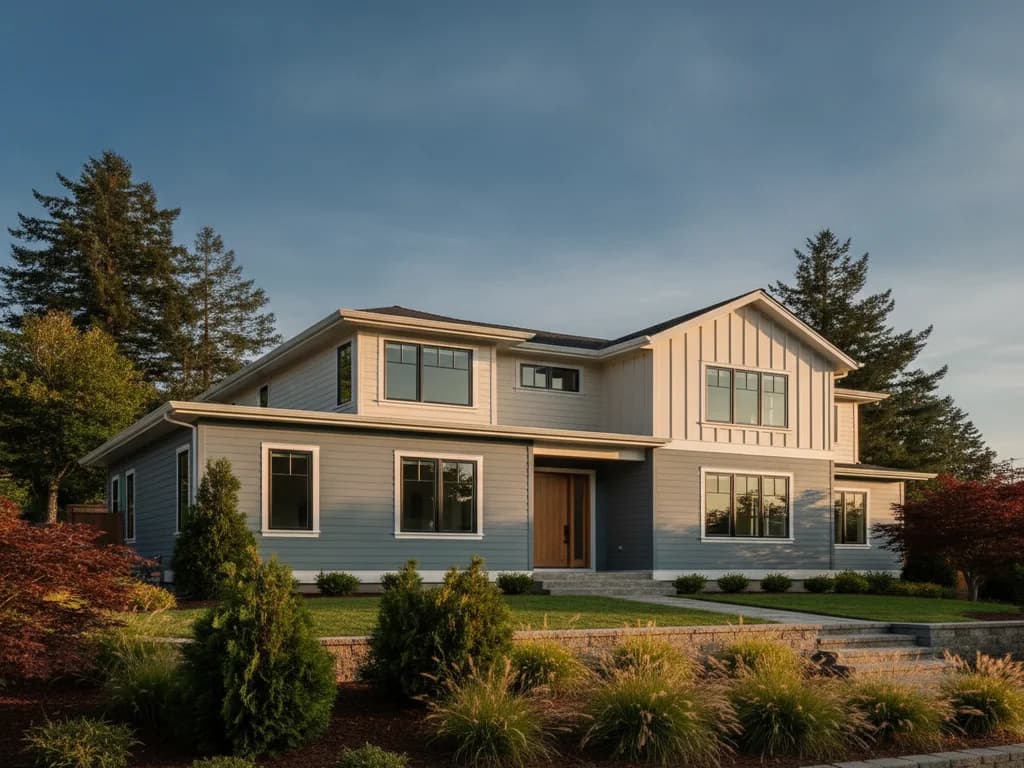
James Hardie Siding in Southwest Washington
James Hardie fiber cement is one of the most rot-resistant exteriors you can put on a Southwest Washington home. It doesn't feed moisture, holds its factory color for years, and stands up to our long, wet winters. Hardie engineers its products by climate zone — our region falls in HZ5, the Pacific Northwest zone built for higher moisture exposure — and our team installs the correct product, over a proper rain-screen assembly, to the manufacturer's standards for your area.
James Hardie fiber cement is one of the toughest exteriors you can put on a Southwest Washington home — engineered for our region's sustained rain and moisture rather than heat and sun. It's one of the three materials we install as part of our siding installation service— and if you're still comparing options, it's worth weighing against LP SmartSide engineered wood and vinyl siding.
- Hardie lap, panel, and shingle-look profiles
- Factory-applied ColorPlus finishes
- HZ5 (Pacific Northwest) product line for our moisture and freeze-thaw exposure
- Rain-screen installation for drainage and drying
- Moisture- and dry-rot-resistant board and trim
- HardieTrim boards for a coordinated exterior
- Full house wrap and flashing integration
- Wind-rated fastening for Gorge-exposed sites in Camas, Washougal, and Skamania County
- Sheathing repair during tear-off
- Manufacturer moisture-warranty documentation
Built for Rain, Not Heat
HZ5 boards are engineered around the Pacific Northwest's sustained moisture, with installation details built around water management rather than sun and heat.
Moisture & Rot Resistance
Made from cement, sand, and cellulose fiber, Hardie doesn't feed rot or absorb moisture the way wood does — a real advantage through our long wet seasons.
Rain-Screen Installation
We install Hardie with a ventilated rain-screen gap behind the panel, so any water that gets past the cladding drains and dries instead of soaking into the sheathing.
Long-Lasting Color
The factory-applied ColorPlus finish is baked on to resist fading, chipping, and moisture intrusion at the finish — far less repainting than field-painted wood siding.
Consultation & Profile Selection
We review your home's style, show Hardie profiles and ColorPlus options, and recommend a combination of board and trim that fits the architecture and your color goals.
Measurement & Order
We measure the home, account for trim and flashing, and order the HZ5 Hardie product engineered for our Pacific Northwest climate.
Tear-Off & Prep
Existing siding is removed, the sheathing is inspected and repaired as needed, and house wrap plus a rain-screen gap and flashing are installed to protect the wall.
Installation & Finish
Hardie board and trim are installed with the correct fasteners, gapping, and clearances the manufacturer specifies, then sealed and detailed for a clean, lasting finish.
Hardie Profiles & Product Lines
HardiePlank lap siding — the most popular profile, in smooth or wood-grain texture, for the classic Pacific Northwest lap look.
HardiePanel vertical siding — panels for board-and-batten or flat modern designs, popular on accent gables.
HardieShingle — shingle-look siding for Craftsman and cottage styling common across the region.
HardieTrim — matching trim boards for window and door surrounds, fascia, and corners for a coordinated exterior.
ColorPlus® Technology & Rain-Screen Installation
ColorPlus applies multiple coats of paint in a controlled factory environment and bakes them onto the board, producing a finish that resists peeling, chipping, and moisture intrusion at the coating far longer than field-applied paint — a meaningful advantage through Southwest Washington's long wet seasons. James Hardie backs that finish with a 15-year limited warranty (see ColorPlus® Technology).
Beyond the finish, how the siding is installed matters just as much as the board itself. We install every Hardie job with a ventilated rain-screen gap behind the panel, HZ5 fastening and gapping specifications, and flashing at every window, door, and penetration — the details that keep the region's steady moisture from tracking behind the cladding. Getting those details right is also part of keeping the manufacturer warranty valid.
James Hardie's Warranty — and How Ours Works With It
A Hardie exterior carries two manufacturer warranties. The fiber cement substrate — the boards, trim, and soffit — is covered by a 30-year non-prorated, transferable limited warranty, and the factory ColorPlus finish is covered separately for 15 years against peeling, cracking, and chipping. You can review both on James Hardie's warranty & lifetime-value page.
Those cover the product. Our work is covered separately by NorthBank Remodel's own workmanship warranty on the installation. The two fit together: James Hardie stands behind the board and the finish, and we stand behind how it's installed. Because a manufacturer warranty only holds when the siding is installed to spec, we follow the HZ5 fastening, flashing, and rain-screen details on every Hardie job.
James Hardie siding pairs well with new windows, trim packages, and exterior painting for a durable, cohesive envelope.
What does HZ5 mean, and why does it matter here?
James Hardie engineers its siding by climate through its HardieZone system. HZ5 is the Pacific Northwest zone, built for our higher rainfall and freeze-thaw exposure, and it's the product line we install across Southwest Washington. Installing the correct zone product — with the manufacturer's specified rain-screen gap and fastening — is also part of protecting the warranty.
Is fiber cement good for a wet, rainy climate?
Fiber cement doesn't absorb and feed moisture the way untreated wood siding can, which is a real advantage through a Southwest Washington winter. Installed over a rain-screen gap, it drains and dries rather than trapping water against the sheathing — that combination is what makes it one of the most durable choices for our region.
Does the color really last, or will I have to repaint?
Hardie's factory-applied ColorPlus finish is baked on and designed to resist fading for many years, which means far less repainting than field-painted wood siding — a real advantage given how much of the year our siding stays damp. You can still repaint down the road if you want a new color.
How does the cost compare to vinyl?
Fiber cement generally costs more up front than vinyl, and pricing depends on your home's size, detailing, and current condition. We provide a written estimate after seeing the home rather than quoting a number sight-unseen.
Why is James Hardie's HZ5 zone the right product for Southwest Washington?
James Hardie engineers its siding by climate through the HardieZone system, and Clark and Cowlitz counties fall in the HZ5 zone — built for the Pacific Northwest's sustained rain and moisture rather than heat and sun. HZ5 boards and installation details prioritize water management: the right gapping, fastening, and flashing to keep moisture from tracking behind the siding through a long wet season. We install the correct zone product for your location, which is also part of keeping the manufacturer warranty intact.
How does Hardie compare to LP SmartSide for a Southwest Washington home?
Both resist moisture and impact well. Hardie is fiber cement — heavier, more rigid, and with the longest color retention through ColorPlus. LP SmartSide is treated engineered wood — lighter, warmer wood-grain texture, and easier to work for custom trim. The choice usually comes down to look, feel, warranty preference, and budget. We walk through both for your home.
Is the ColorPlus finish worth it over field painting?
For most Southwest Washington homeowners, yes. ColorPlus is applied and baked on in the factory, so it resists fading, chipping, and moisture intrusion at the finish far longer than field-applied paint — which means fewer repaints over the life of the siding through our long wet seasons. It adds to the up-front cost but saves the immediate painting expense and extends the time before the first repaint.
We provide james hardie siding to homeowners across the Vancouver metro, Clark County, the Columbia River Gorge, and the Lewis River and Cowlitz County corridor. Each community has its own dedicated page with local permitting, climate, and project detail — and each regional hub covers the surrounding areas we also serve.
Compare James Hardie against our other siding materials, or explore the rest of our exterior remodeling services.
The following government agencies, industry organizations, and official resources provide additional information relevant to your remodeling project.
Ready to Start Your Remodeling Project?
Get a free, no-obligation estimate from Southwest Washington's remodeling and exterior specialists. Licensed, insured, and ready to build.