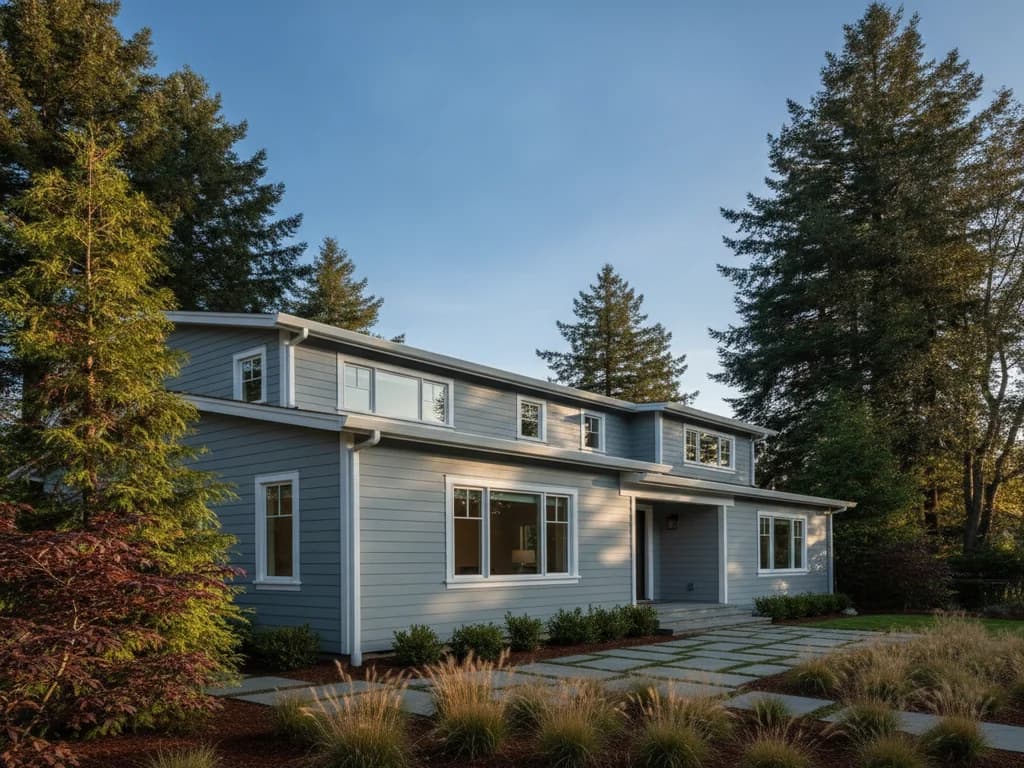
Vinyl Siding in Southwest Washington
Vinyl remains a practical choice for many homes and rentals across our service area: it never needs repainting, comes in a wide range of colors, and is one of the more budget-friendly ways to refresh an exterior. Our team installs standard and insulated vinyl over a proper weather-resistive barrier, with the fastening allowance and detailing our wet, and in places windy, climate calls for.
Vinyl remains the practical, budget-smart choice for many Southwest Washington homes and rentals. It's one of the three materials in our siding installation service— if durability or long-term color is your priority, it's worth comparing against James Hardie fiber cement and LP SmartSide engineered wood.
- Standard and insulated vinyl siding
- Wide selection of colors and profiles
- No repainting and easy upkeep
- Insulated backing for added energy efficiency
- Proper expansion-gap installation
- Weather-resistive barrier installation
- Coordinating trim, soffit, and fascia
- Sheathing inspection during tear-off
- Repairs and section replacement
- Higher wind-load fastening for Gorge-exposed sites
Budget-Friendly Refresh
Vinyl is the most affordable way to give a home or rental a fresh, uniform exterior — a strong fit when value and quick turnaround matter most.
No Repainting
The color runs through the material, so vinyl never needs repainting and cleans up with a garden hose — low upkeep through our long wet seasons.
Insulated Option
Insulated vinyl adds rigid foam behind the panel for better energy performance and a more solid feel, plus improved impact resistance over hollow vinyl.
Wide Color & Profile Range
A broad palette and multiple profiles let us match a look you want, and coordinate trim, soffit, and fascia for a finished result.
Assessment & Color Selection
We look at the existing exterior, discuss whether insulated vinyl makes sense for your goals, confirm the wind exposure at your site, and help you pick a color and profile.
Material Order
Siding, trim, and weather-barrier materials are ordered together so the wall system is complete.
Tear-Off & Prep
Old siding is removed, sheathing is inspected and repaired as needed, and house wrap is installed.
Installation & Finish
Vinyl is hung with the proper expansion allowance and fastening schedule for your site's wind exposure, then trim, soffit, and fascia complete the look.
Standard vs. Insulated Vinyl
Standard vinyl is a hollow panel — the most affordable siding you can install. Insulated vinyl bonds rigid foam to the back of each panel, which raises energy performance, dampens noise, and makes the siding feel more solid underhand. The foam also backs the panel so it resists denting better than hollow vinyl.
For a rental or a tight budget, standard vinyl does the job. For a primary home where winter heating bills and a higher-end feel matter, insulated vinyl is usually the upgrade worth making. We price both so you can decide.
Installing Vinyl for Gorge Wind
Vinyl expands and contracts with temperature, so it has to be hung — not nailed tight — with the correct expansion allowance. Panels that can float behind their fasteners won't buckle or pull at the seams as the season turns.
For homes in Camas, Washougal, North Bonneville, Stevenson, and Carson, sustained wind funneling out of the Columbia River Gorge calls for a tighter fastening schedule than standard installation. As with every re-side, we install over house wrap and inspect the sheathing during tear-off, so the moisture barrier and any needed repairs are handled before the new vinyl goes up.
Certified Vinyl & the ASTM D3679 Standard
Not all vinyl is equal, and the way to tell is certification. The Vinyl Siding Institute (now the Polymeric Exterior Products Association) runs a product certification program in which an independent, ISO/IEC 17065-accredited lab (Intertek) tests siding against ASTM D3679, the industry standard for rigid PVC siding. We specify VSI-certified vinyl so the product you get has been independently validated, not just marketed.
ASTM D3679 sets the bar for the two things our conditions test most: wind-load resistance and impact resistance, along with weathering under sustained moisture — both directly relevant in the Camas-Washougal-Gorge wind corridor. Insulated vinyl carries the related ASTM D7793 requirements. Choosing a certified product and hanging it with the correct fastening schedule is what keeps a vinyl exterior performing through years of wind and rain.
Is insulated vinyl worth the upgrade?
For many homes it is. Insulated vinyl adds a layer of rigid foam behind the panel, which improves energy performance, makes the siding feel more solid, and helps it resist impact and wind pressure better than hollow vinyl. We can compare both options for your home.
Does vinyl hold up to the wind near the Gorge?
It can, when it's fastened to a higher wind-load schedule. Homes in Camas, Washougal, and along the Columbia River Gorge in Skamania County see stronger, more consistent wind than communities further from the river, and vinyl needs the right fastening and panel selection to handle it. We'll assess your site's exposure and recommend accordingly, including non-vinyl alternatives if that's a better fit.
Will vinyl warp or buckle in our climate?
Quality vinyl installed with the correct expansion gaps handles our temperature swings well. Warping usually comes from siding nailed too tight rather than the climate itself. Proper installation — leaving room for the material to move — is what prevents most problems.
How long does vinyl siding last?
Quality vinyl lasts many years with essentially no maintenance beyond occasional cleaning to keep moss and mildew from building up in our damp climate.
Is insulated vinyl worth it in Southwest Washington?
For many homes, yes. Insulated vinyl adds a layer of rigid foam behind the panel, which improves energy performance through our long heating season, makes the siding feel more solid, and helps it resist impact better than hollow vinyl. We compare standard and insulated options for your home so you can weigh the cost against the benefit.
How does vinyl compare to fiber cement and engineered wood?
Vinyl is the most budget-friendly and never needs repainting, but it's less impact-resistant than fiber cement or engineered wood and can fade over time. Fiber cement (James Hardie) and engineered wood (LP SmartSide) cost more but hold color longer and resist moisture better through our wet seasons. Vinyl is a strong fit for rentals and value-focused projects.
Will vinyl hold up to Columbia River Gorge wind?
Quality vinyl installed with the correct fastening handles our region's wind well, but Camas, Washougal, North Bonneville, Stevenson, and Carson see sustained wind funneling out of the Gorge that calls for extra attention. We follow tighter fastening schedules and manufacturer high-wind installation details for homes in that corridor so panels don't work loose or rattle.
We provide vinyl siding to homeowners across the Vancouver metro, Clark County, the Columbia River Gorge, and the Lewis River and Cowlitz County corridor. Each community has its own dedicated page with local permitting, climate, and project detail — and each regional hub covers the surrounding areas we also serve.
The following government agencies, industry organizations, and official resources provide additional information relevant to your remodeling project.
Ready to Start Your Remodeling Project?
Get a free, no-obligation estimate from Southwest Washington's remodeling and exterior specialists. Licensed, insured, and ready to build.