James Hardie doesn't manufacture one fiber cement formulation and ship it everywhere. The company engineers its siding by climate zone — a system it calls the Hardie Zone System — because a product built to perform in a hot, dry Southwest desert has different requirements than one built for a cool, wet Pacific Northwest winter.
Southwest Washington, including Vancouver, Camas, Battle Ground, and the rest of Clark County, falls in the zone James Hardie engineers for cooler temperatures, freeze-thaw cycling, and consistently high rainfall. Understanding what that zone assignment actually changes about the product helps explain why zone-correct material and installation both matter here.
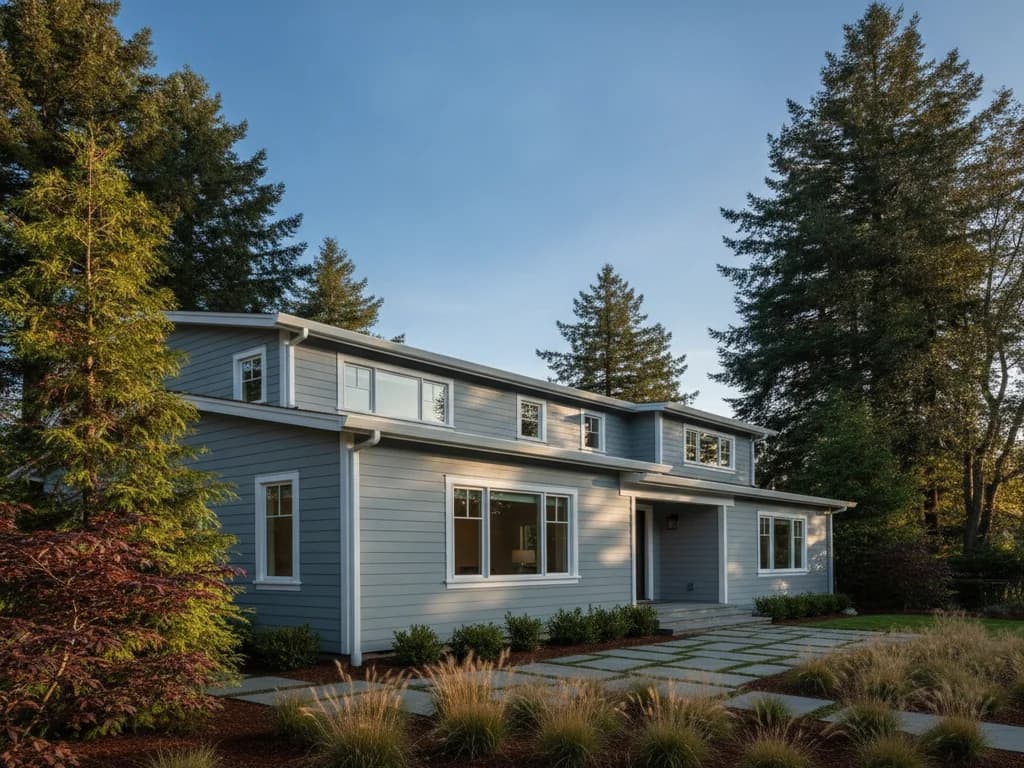
James Hardie's zone engineering accounts for the specific combination of temperature swings and moisture exposure a region experiences over the life of the siding. Southwest Washington's marine climate delivers exactly that combination: winters that dip below freezing often enough to matter, paired with rainfall spread across most months of the year rather than concentrated in a short season.
That's a meaningfully different profile than a hot, arid climate, where UV exposure and thermal cycling dominate, or a hot, humid climate, where sustained high humidity is the primary stress. James Hardie's zone system exists specifically so a homeowner in our region gets siding engineered for our actual conditions, not a generic national average.
It's worth noting the zone system applies specifically to the fiber cement formulation, not to every product decision on your home. Trim, soffit, and accent details still need to be specified correctly for the assembly as a whole, and the zone designation doesn't replace good flashing, clearances, or a properly drained wall behind the siding — it's one input into a larger, climate-appropriate exterior, not a substitute for the rest of it.
Vancouver, Camas, Battle Ground, Ridgefield, and the rest of Clark County, along with the Columbia River Gorge communities, all sit in the same James Hardie climate zone.
For a Southwest Washington homeowner, the practical takeaway is straightforward: the James Hardie products installed on your home should be sourced and specified for our climate zone, not simply whatever a supplier has in stock. This affects the formulation of the fiber cement itself, engineered for the freeze-thaw and moisture conditions our region actually experiences.
It also reinforces why installation details matter as much as the product — the zone-correct formulation is only half of a durable exterior. Proper flashing, a drained and vented rain-screen gap behind the siding, and fastening that meets manufacturer specifications all work together with the zone-correct material to deliver the performance James Hardie's own warranty documentation is built around.
When you're comparing bids for a James Hardie project, it's worth asking directly whether the proposed material is specified for our region. It's a simple question, and any contractor experienced with James Hardie installations in Southwest Washington should be able to answer it without hesitation — it's a standard part of specifying the job correctly, not a specialty request.
Zone-correct siding isn't a marketing detail — it's the difference between a product engineered for your actual climate and one that happens to look similar on a shelf. When we spec and install James Hardie siding across Clark County and the Columbia River Gorge, we're specifying products and installation methods matched to our region's freeze-thaw and rainfall profile, in line with James Hardie's own zone guidance.
That consistency matters most over the long term — through the winters, not just the first dry season after installation. It's also part of what keeps a project eligible for the manufacturer's substrate and finish warranty coverage, which depends on installation to the specified standards for the region.
Zone-correct product paired with a proper rain-screen assembly is how we build a James Hardie exterior meant to perform through Southwest Washington winters, not just look good the first summer.