Fiber cement siding is a mix of Portland cement, sand, and cellulose fiber, pressed and cured into planks, panels, and shingles that hold paint or a factory finish far longer than wood and resist the moisture, rot, and pest problems that wood siding is prone to. James Hardie is the manufacturer most homeowners mean when they say "Hardie board," and it is the most common fiber cement brand installed across Southwest Washington for a straightforward reason: it is engineered by climate zone, and the zone covering Clark, Skamania, and Cowlitz counties is built around exactly the conditions we actually have — sustained rain and moisture, not heat and sun.
This guide walks through what that climate engineering means in practice, how the siding actually gets installed here (the installation detail matters as much as the product), the full range of Hardie profiles and how to choose among them, the ColorPlus factory-finish system, what the warranty covers, and why fiber cement holds up so well against the two things that damage exteriors most in this region: relentless marine rain in the Vancouver-Camas-Washougal corridor, and the sustained wind that comes down the Columbia River Gorge through Washougal, Stevenson, and Carson.
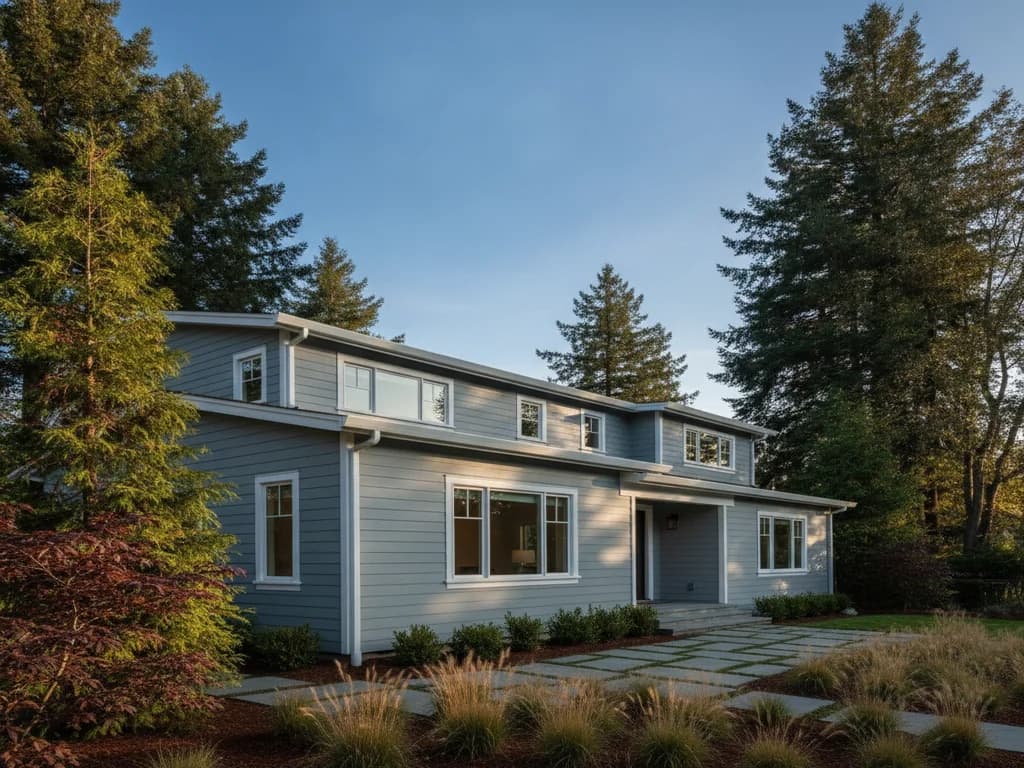
This is the single most important distinction between a generic siding job and one specified correctly for Southwest Washington.
Climate-zone engineering, not one-size-fits-all
James Hardie designs and formulates its siding differently by region through the HardieZone system, because a product engineered for a hot, dry climate performs differently than one engineered for a cold, wet one. This is a real manufacturer distinction, not marketing — the boards, the recommended fastening, and the installation guidance genuinely differ by zone.
Southwest Washington is HZ5
Clark, Skamania, and Cowlitz counties fall within James Hardie's HZ5 zone — the zone built around cooler temperatures, freeze-thaw cycling, and sustained, high year-round rainfall rather than intense heat and UV exposure. HZ5 products and installation specifications prioritize water management above all else: the correct gapping, fastener pattern, and flashing details that keep moisture from tracking behind the siding through a long wet season.
Zone accuracy protects the warranty
Installing the correct HZ5-rated product to the correct HZ5 installation spec is not just a performance question — it is also what keeps James Hardie's manufacturer warranty intact. We install HZ5 boards and follow HZ5 fastening, gapping, and flashing details on every Hardie project, because a warranty only holds when a product is installed to the manufacturer's spec for its climate zone.
See James Hardie's own explanation of the system at the Hardie™ Zone System page — Southwest Washington and the wider Pacific Northwest fall in HZ5.
The product is only half the equation. How it's installed — specifically, whether it's installed as a drained-and-vented assembly — is just as important in a climate this wet.
What a rain screen actually is
A rain screen is a deliberate, drained-and-vented gap — created with vertical furring strips or a purpose-built matrix — between the back of the siding and the weather-resistive barrier over the sheathing. It gives any water that gets past the cladding somewhere to go: down and out, instead of trapping against the wall assembly.
Why it matters more here than almost anywhere
Every type of cladding leaks eventually — that is a settled building-science principle, not a defect of any one product. In a climate with as much sustained rainfall as Southwest Washington's, a wall assembly that cannot drain and dry is simply a matter of time before moisture reaches the sheathing and framing. A rain-screen gap is one of the highest-value details in any siding installation in this region.
Flashing and the weather-resistive barrier
The rain-screen gap only works alongside a properly lapped weather-resistive barrier and correct flashing at every window, door, and penetration — water has to be directed out and down at each transition, shingle-fashion, the same way roofing sheds water. We integrate James Hardie's own weather-barrier and flashing products into the assembly rather than treating the housewrap as an afterthought behind the siding.
What it looks like on your house
From the outside, a properly installed rain-screen system looks identical to a direct-applied installation — the difference is entirely in the wall assembly you don't see. It is also why two Hardie bids can differ in price for what looks like the same siding: one may be pricing a proper drained assembly and the other a direct-to-sheathing installation that skips it.
For the underlying building-science principle, see Building Science Corporation's guidance on moisture control, and for the weather-barrier system we integrate behind every Hardie install, see James Hardie's HardieWrap® moisture-management products.
James Hardie makes more than one profile, and choosing the right one is about the look you want and the details of your home's architecture as much as performance.
HardiePlank® lap siding
The classic, most widely installed profile — horizontal lap boards in Select Cedarmill wood-grain or Smooth texture. It is the closest fiber cement equivalent to traditional wood lap siding and the most common choice on Southwest Washington homes.
HardiePanel® vertical siding
Large-format vertical panels used for board-and-batten and modern flush-panel looks, available in Cedarmill, Smooth, Stucco, and Sierra 8 textures — a popular choice for contemporary remodels and accent walls.
Hardie® Shingle siding
Fiber-cement shake-and-shingle profiles, in Straight Edge and Staggered Edge panels, for gable accents and cottage or Craftsman-style detailing without the maintenance burden of real cedar shake.
Hardie® Trim, Soffit, and Architectural Panel
Trim boards finish window and door surrounds, corners, and fascia; vented and non-vented soffit panels finish the roofline; and the Architectural Panel (Aspyre Collection Reveal) system offers a large-format, clean-reveal look for contemporary and higher-design facades. All are engineered as a complete fiber-cement exterior system, not siding alone.
See the full catalog with HardiePlank® lap siding, HardiePanel® vertical siding, and Hardie® Shingle siding.
Color is where most homeowners spend the most decision-making time, and Hardie's factory finish changes the maintenance conversation as much as the aesthetic one.
ColorPlus is James Hardie's baked-on factory finish, applied and cured under controlled conditions before the boards ever reach the jobsite — a more consistent, more durable bond than field-applied paint, and it means less on-site painting time and mess.
The Statement Collection is the core ColorPlus palette; the Dream Collection expands the range further for homeowners who want more options. Both are designed to hold color and resist fading better than typical field-applied paint over time.
Homeowners who want a custom color outside the ColorPlus range can still have Hardie siding field-painted; it simply forgoes the factory-finish warranty coverage on the paint itself. We walk through the trade-off during design so it's a deliberate choice, not a surprise.
Browse the Statement Collection® ColorPlus palette to see the current core color range.
Moisture and pest resistance by design
Fiber cement is inherently resistant to the rot, swelling, and insect damage that affect wood siding, because it doesn't contain the organic material that moisture and pests feed on. That is the core reason it performs so well in a climate as wet as ours.
The manufacturer warranty
James Hardie backs its siding, trim, and soffit with a transferable, non-prorated limited substrate warranty and a separate limited warranty on the ColorPlus finish, as published on James Hardie's own warranty page. Warranty coverage depends on the product installed to the manufacturer's specification for its HardieZone — another reason correct HZ5 installation isn't optional.
What voids or limits a warranty claim
Installation that skips the manufacturer's fastening, gapping, or flashing spec — or uses a product rated for the wrong climate zone — can affect warranty coverage. We follow James Hardie's published HZ5 installation instructions on every project specifically so the warranty stays intact if you ever need it.
Full current terms are published directly by the manufacturer at James Hardie — Warranty & Lifetime Value. We also back our installation work with our own written workmanship warranty — ask us for the current terms.
Two forces do most of the damage to exteriors in Southwest Washington, and they are different problems in different parts of our service area. In the Vancouver-Camas-Washougal corridor and along the Lewis River-Cowlitz communities, it is sustained marine rain — long stretches of steady, driving moisture rather than short intense storms, which is exactly the condition HZ5 engineering and rain-screen installation are built to manage.
Further east, in Washougal, Stevenson, and Carson, the Columbia River Gorge adds a second variable: sustained, sometimes severe wind that funnels through the Gorge and puts real lateral and uplift load on exterior cladding. Fiber cement's density and James Hardie's engineered fastening patterns hold up well against that wind load, and correct fastening — the right nail or screw pattern, driven flush and not overdriven — matters even more on Gorge-exposed elevations.
The combination of a moisture-resistant material, a climate-zone-specific engineering approach, and a drained rain-screen wall assembly is, in our experience, the most durable exterior system available for this specific climate. It isn't the cheapest option on day one, but it is the option built around the two forces — rain and wind — that actually determine how long an exterior lasts here.
For current forecast and climate context across the corridor, the National Weather Service Portland forecast office covers Clark and Cowlitz counties and the Gorge.