Southwest Washington's marine climate is a tougher test for exterior siding than most of the country gives it credit for. It's rarely the coldest or the wettest single event that causes damage — it's the sheer duration of it. Siding here spends months at a time absorbing ambient moisture, drying only partially between storms, and doing it again the next week.
That reality should drive the material decision more than color or texture. This guide compares the three siding materials we install most across Vancouver, Camas, Battle Ground, and the wider Clark County area — fiber cement, engineered wood, and vinyl — specifically for how each performs under sustained Pacific Northwest moisture.
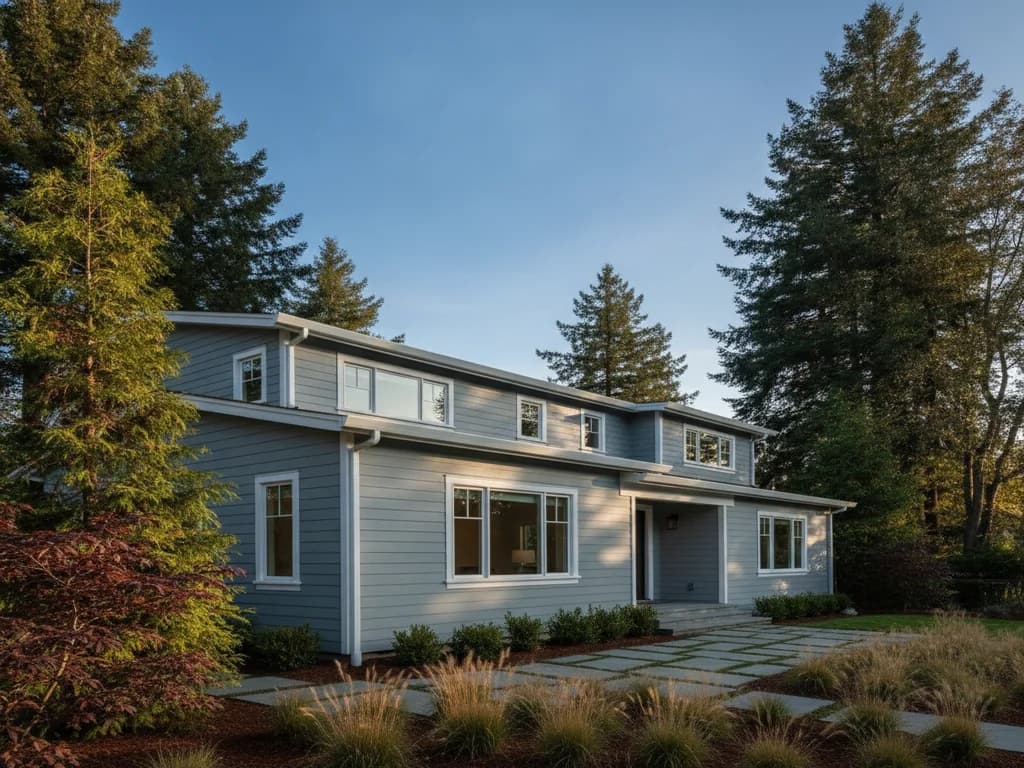
Fiber cement
- Cement-based composition resists moisture absorption, rot, and pest damage far better than any wood-based product.
- Factory-applied finishes hold color and resist fading longer than field-painted siding.
- Rated highly for moisture, fire, and pest resistance in federal building-science comparisons.
Trade-offs
- Heavier material that requires proper fastening and, ideally, two installers.
- Higher material and installation cost than vinyl.
- Cut edges need to be sealed or primed to maintain moisture resistance.
Engineered wood
- Lighter and often faster to install than fiber cement.
- Factory treatments resist decay, termites, and fungal growth better than untreated wood.
- Warmer, more traditional wood-grain look for homeowners who want that aesthetic.
Trade-offs
- Wood-based substrate means it's more moisture-sensitive than fiber cement if the finish is compromised.
- Cut edges and fastener penetrations need careful sealing to prevent water intrusion.
- Typically shorter manufacturer warranty terms than premium fiber cement lines.
Vinyl
- Lowest material and installation cost of the three.
- Won't rot, and never needs painting.
- Simple, fast installation on straightforward wall assemblies.
Trade-offs
- Can warp or distort under sustained heat and impact, and is more prone to visible seams.
- Colors are baked in and can't be repainted if a homeowner wants to change the look later.
- Generally viewed as a lower-end aesthetic on higher-value Clark County homes.
None of these materials perform well long-term if they're installed as a flat, sealed-tight skin against the wall. Every cladding — fiber cement, engineered wood, or vinyl — leaks some water at seams, fasteners, and penetrations over time, which is why the assembly behind the siding matters as much as the siding itself.
A weather-resistive barrier, correctly lapped and taped, is the first line of defense. Flashing at every window, door, and horizontal trim transition directs water back out instead of into the wall cavity. And in our climate specifically, a drained and vented rain-screen gap behind the siding gives any water that does get past the cladding somewhere to go besides the sheathing. We build that assembly the same way regardless of which siding material sits on top of it.
This is also why two siding bids that spec the same material can still perform very differently over time. A quote built around bare material and labor, with no allowance for a weather-resistive barrier upgrade, proper flashing at every penetration, or a rain-screen gap, is pricing a different (and lower-performing) wall assembly than one that includes those details as standard. We're glad to walk through exactly what's included in our proposal so you can compare it apples-to-apples against another bid.
For most Southwest Washington homes, fiber cement is the material we recommend when moisture resistance and long-term value are the priority — it's the closest thing to a low-maintenance, high-durability answer to our climate, which is why it's become the default choice on new construction and full re-sides across Clark County. Engineered wood is a strong option for homeowners who want a wood-grain look with better decay resistance than raw lumber. Vinyl remains a reasonable, budget-conscious choice on the right project, particularly for rental or investment properties where lowest cost matters more than long-term resale positioning.
The right answer also depends on your home's existing wall assembly, HOA requirements if applicable, and how long you plan to own the home. We walk through all three with an honest comparison for your specific house before recommending one.
Curious specifically about James Hardie fiber cement? See our dedicated Hardie Zone explainer and installation-standards guide for the details behind the material.