Bathroom lighting is easy to under-plan because a single ceiling fixture technically works — the room isn't dark. But a single overhead light casts shadows across your face at the mirror, does nothing for the shower, and leaves no way to dim things down for a relaxed evening routine. Layered lighting fixes all three at once, and in Southwest Washington, where overcast, grey-sky days stretch through much of fall and winter, good bathroom lighting also does some of the work natural light can't.
As with every fixture near water, code and safety matter just as much as looks — a fixture rated for the wrong location can be a hazard, not just an aesthetic miss.
Task lighting
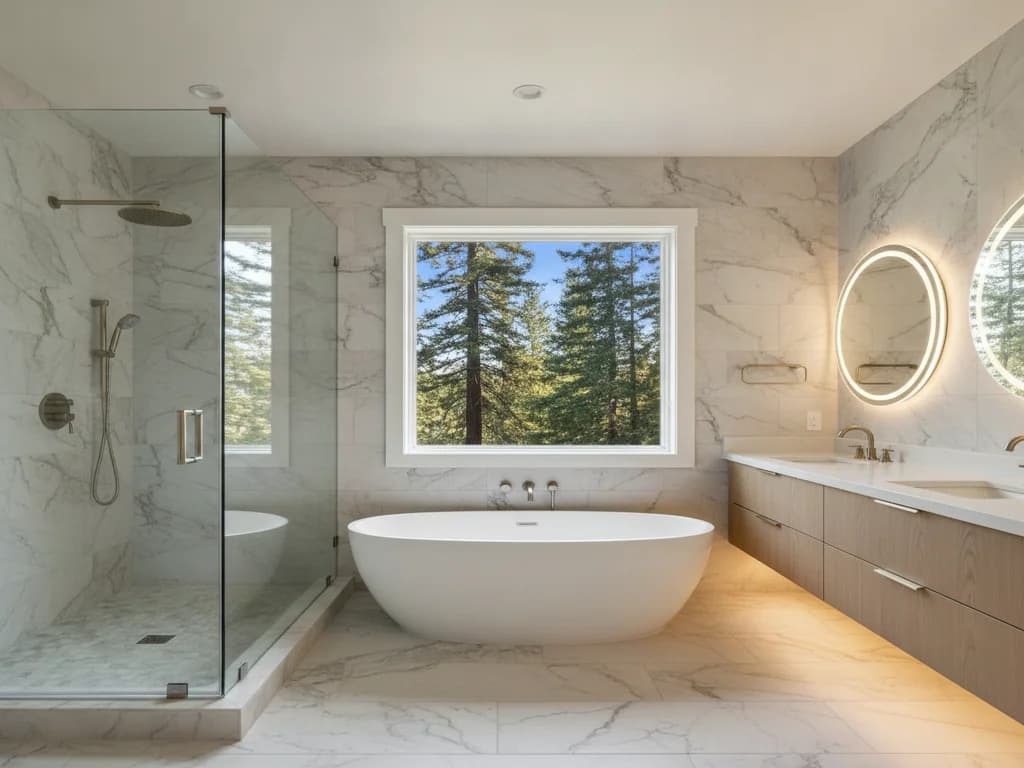
Vertical fixtures on either side of the mirror, at roughly eye level, light your face evenly without the shadows a single overhead or top-mounted fixture creates. This is the layer that matters most for shaving, makeup, and skincare.
Ambient lighting
A ceiling fixture or recessed cans provide the general light level for the room as a whole, sized to the square footage so the space doesn't feel dim on a grey Pacific Northwest afternoon.
Shower and accent lighting
A dedicated wet-rated recessed fixture inside the shower itself, plus optional accent lighting under a floating vanity or inside a niche, rounds out the layered approach.
Not every light fixture is safe in every part of a bathroom. Fixtures rated for "wet locations" are built to be exposed to direct water — the only type safe to install inside or directly above a shower or tub. Fixtures rated for "damp locations" tolerate ambient humidity but not direct spray, appropriate for the rest of the room. Standard interior-rated fixtures belong nowhere near either zone.
We select and place every fixture by its rating first, then its style — a beautiful pendant that isn't rated for the space it's proposed in simply doesn't go in, regardless of how it looks in a catalog photo.
Southwest Washington's marine climate brings a long stretch of overcast days through fall and winter, and a bathroom — often a smaller, interior room with limited or no window — feels that shortage of natural light more than most rooms in the house. Where a window exists, we design lighting to complement it rather than compete with it, using dimmable layers that scale up as daylight fades earlier in the afternoon.
Where there's no natural light source at all, generous, well-distributed ambient lighting plus strong vanity task lighting does the most to keep the room feeling bright and usable year-round.
A neutral-to-warm color temperature at the vanity renders skin tones most accurately for grooming tasks, while a slightly warmer tone in ambient fixtures creates a more relaxed feel for the rest of the room. Dimmer switches on both layers let the same fixtures serve a bright morning routine and a low-lit evening bath without installing separate fixtures for each mood.