Countertops take more daily abuse than almost any other surface in a home — hot pans, knife work, spilled wine, a five-year-old's homework, and constant wiping down. They're also one of the most visible finishes in the kitchen, so the decision sits at the intersection of durability, maintenance tolerance, and how the material actually looks in your space.
There's genuinely no single best countertop material; the right one depends on how you cook, how much maintenance you're willing to do, and your tolerance for the natural variation that comes with real stone. This guide compares the materials we install most often across Vancouver, Camas, Washougal, and the wider Clark County area.
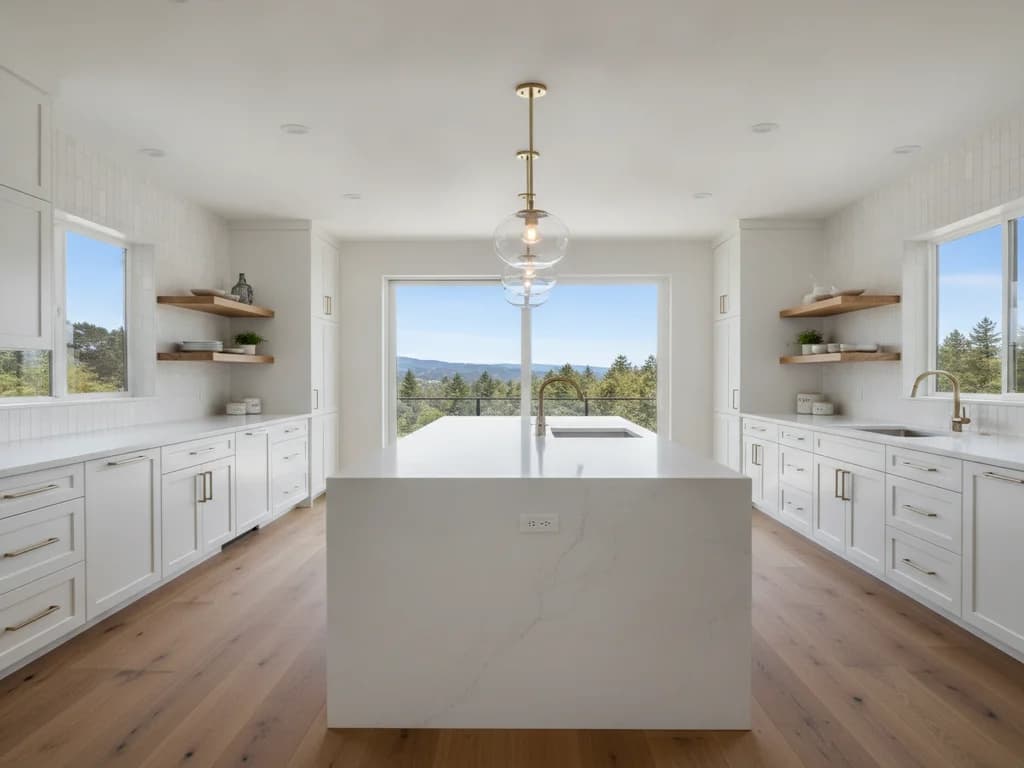
Quartz (engineered stone)
Advantages
- Non-porous and doesn't need sealing — the lowest-maintenance option we install.
- Very consistent color and pattern from slab to slab, useful for large or multi-piece counter runs.
- Highly resistant to staining and scratching for normal kitchen use.
Trade-offs
- Less heat-tolerant than natural stone — trivets are still a good habit, even though most quartz resists brief contact.
- Manufactured look can read as less 'organic' than natural stone to some homeowners.
Granite
Advantages
- Naturally heat- and scratch-resistant, genuinely tough for everyday cooking.
- Unique veining and color in every slab — no two installations look identical.
- A long track record in kitchens; well understood by fabricators and easy to source regionally.
Trade-offs
- Porous and requires periodic sealing to resist staining, particularly with darker liquids like wine or oil.
- Slab-to-slab variation means you should view your actual slab before fabrication, not just a sample chip.
Quartzite
Advantages
- A natural stone that's harder than granite in many varieties, with a look that can resemble marble.
- Popular for homeowners who want the veined, high-end look of marble with more everyday durability.
Trade-offs
- Needs sealing like granite, and quality varies significantly between quarries — some quartzite is softer and more porous than the name implies.
- Generally among the pricier natural-stone options.
Butcher block (wood)
Advantages
- Warm, natural look that pairs well with both traditional and contemporary cabinetry.
- Forgiving to work directly on, and minor scratches can often be sanded out.
- A popular choice for a single island section paired with stone elsewhere, rather than the whole kitchen.
Trade-offs
- Needs regular oiling to stay water-resistant, and is genuinely a poor choice near a sink or in a consistently humid location without diligent maintenance.
- More vulnerable to water damage than any stone or quartz option — a real consideration in our wetter climate if it's not maintained.
Laminate
Advantages
- The most budget-friendly option, with a huge range of colors and patterns, including convincing stone-look prints.
- Fast to fabricate and install, useful for tight remodeling timelines.
Trade-offs
- Can chip at seams and edges over time, and damage isn't repairable the way stone can sometimes be honed or polished.
- Less heat- and scratch-resistant than any of the stone or quartz options.
Southwest Washington's marine climate keeps indoor humidity higher for more of the year than a drier inland climate would, and that has real implications for porous countertop materials. Granite and quartzite need sealing on a regular schedule to stay stain-resistant, and we recommend homeowners actually keep to that schedule here rather than treating it as optional — a lapsed seal shows up faster as staining in a consistently humid kitchen.
Wood countertops are the material most affected by our climate. Butcher block near a sink, dishwasher, or window that gets condensation needs diligent oiling and prompt drying after use; without that upkeep, it will warp, gray, or develop mold faster here than it would in a drier region. We're honest with clients about that trade-off — a wood island top can be a beautiful accent, but it's not a maintenance-free surface anywhere, and especially not in the Pacific Northwest.
Quartz's non-porous surface makes it the most forgiving material for our climate specifically because it doesn't absorb ambient moisture or require sealing — one reason it's become the most requested countertop material in the kitchens we remodel across Clark County.
- Eased or pencil edges (a slightly softened square edge) are the most common choice — clean, classic, and the least expensive edge profile to fabricate.
- Bullnose (fully rounded) edges suit traditional kitchens and are a practical choice for households with young children, since there's no sharp corner.
- Waterfall edges, where the countertop material continues down the side of an island to the floor, are a striking but higher-cost detail that's become popular on kitchen islands in newer Camas and Ridgefield builds.
- Finish also matters beyond the edge profile — a honed (matte) finish on granite or quartzite shows fingerprints and etching less than a polished finish, a genuinely practical consideration for a busy family kitchen.
| Material | Upkeep |
|---|---|
| Quartz | Wipe with mild soap and water; no sealing required. |
| Granite / quartzite | Reseal on the schedule recommended by your fabricator, typically every one to two years depending on the stone and sealer. |
| Butcher block | Oil regularly (mineral oil or a food-safe butcher block conditioner) and dry standing water immediately. |
| Laminate | Wipe clean; avoid cutting directly on the surface and avoid setting very hot pans on it. |
Start with how you actually cook and clean, not just how a slab photographs. If low maintenance is the priority, quartz is the clear starting point in our climate. If you want the one-of-a-kind look of real stone and are willing to reseal on schedule, granite or quartzite are excellent choices. Wood works best as an accent rather than the primary work surface. We bring slab samples to your home during the estimate so you can see the material in your actual kitchen light before deciding.