Shower glass is usually the last thing we finalize on a walk-in shower project — and that's intentional. The glass configuration depends on the shower's footprint, whether it's curbless or has a curb, and how the showerhead is positioned, so locking in glass before those decisions are made means either a mismatch or a change order later.
Once the layout is set, the choice comes down to how much metal frame you want visible, how the panel will contain spray without a curb to help, and how much upkeep you're willing to put into keeping glass clear in a climate where hard-water spotting and soap scum build up if a squeegee habit doesn't stick.
Advantages
- Lowest cost of the three glass options.
- The metal frame adds rigidity, which can simplify installation on an irregular opening.
- A wide range of frame finishes to match cabinet and fixture hardware.
Trade-offs
- The visible metal frame reads as more dated than frameless or semi-frameless in most current designs.
- More metal-to-glass seams means more places for mineral buildup and mildew to collect.
Advantages
- A cleaner look than fully framed, with metal limited to the header and a few support points.
- More affordable than fully frameless while still reading as a modern, open shower.
- A practical middle ground for a curbless or low-curb entry that still needs some structural support.
Trade-offs
- Still has some visible metal at panel edges, which shows water spots more than glass alone.
Advantages
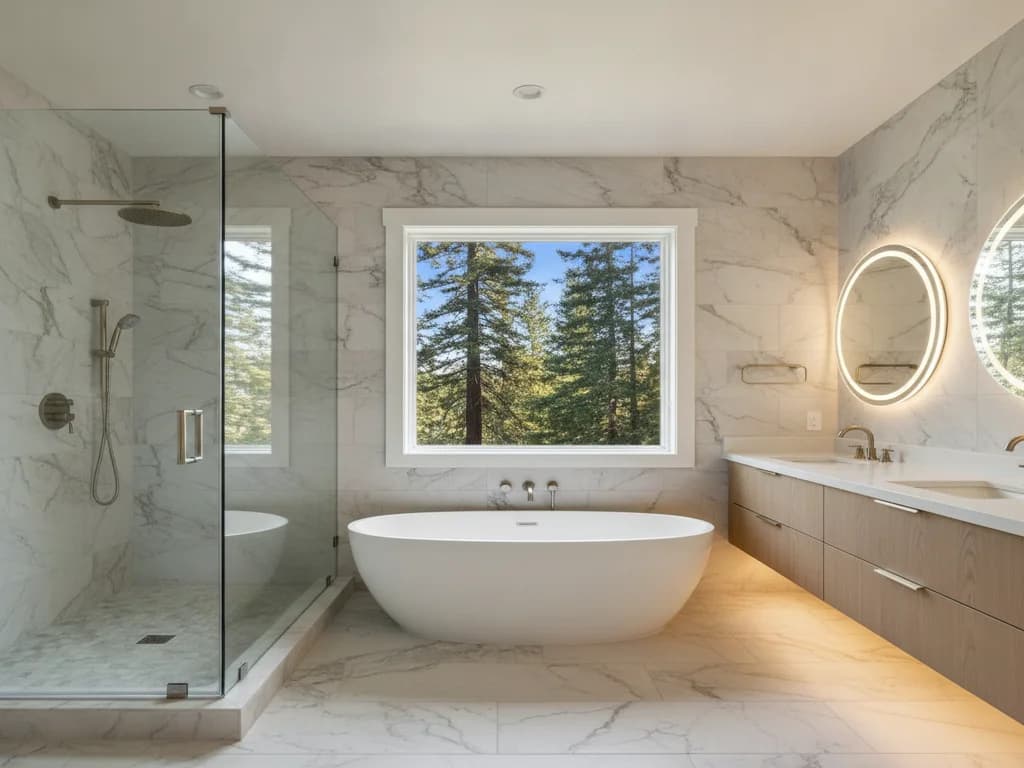
- The most open, minimal look — thick tempered glass with essentially no visible frame.
- Makes a small bathroom feel larger by removing visual breaks between the shower and the rest of the room.
- The standard choice for a true curbless, walk-through shower design.
Trade-offs
- The highest cost of the three options due to the thicker glass and precision hardware required.
- Requires very accurate installation — the opening has to be built true for the glass to fit and seal properly.
- Every water spot shows on large uninterrupted glass, which raises the maintenance bar.
On a curbless shower, the glass panel is doing a job the curb used to do — keeping spray inside the wet area. We size and position glass based on where the showerhead sits and how the pan slopes, not a standard panel width. A panel that's too short or placed too far from the spray pattern is the most common reason a curbless shower leaks water onto the surrounding floor.
Hardware finish is worth coordinating with your vanity faucet and cabinet pulls — matte black, brushed nickel, and polished chrome are the most common finishes we install, and matching them across the room pulls the whole design together.