Dry Rot & Siding Repair in Felida, WA
Diagnosing and repairing dry rot and water intrusion, done right.
Felida is one of the Vancouver-metro communities in Clark County that we serve across Southwest Washington. When it comes to dry rot & siding repair, the details that matter here are specific to Felida homes.
Felida sits at roughly 174 feet, on the Clark County plain, in the same wet marine climate as the rest of the Vancouver metro area. PRISM's 1991-2020 climate normals put it at about 40.6 inches of precipitation a year — spread across about 103 measurable-rain days a year at VANCOUVER 4 NNE, 4.5 miles away. For dry rot & siding repair, this climate is the whole problem: water gets behind cladding at flashing details and unsealed penetrations, then sits against sheathing and framing that never fully dries, which is why we chase the source and the drainage path rather than only replacing what looks rotten. Across Felida that spans early-1900s Craftsman homes near the core and much newer east-side construction, so dry rot & siding repair is specified to the assembly actually in front of us, under the Washington State Energy Code.
This page covers dry rot & siding repair specifically for Felida. For the full service details, see our Dry Rot & Siding Repair page, or explore all the remodeling work we do in Felida.
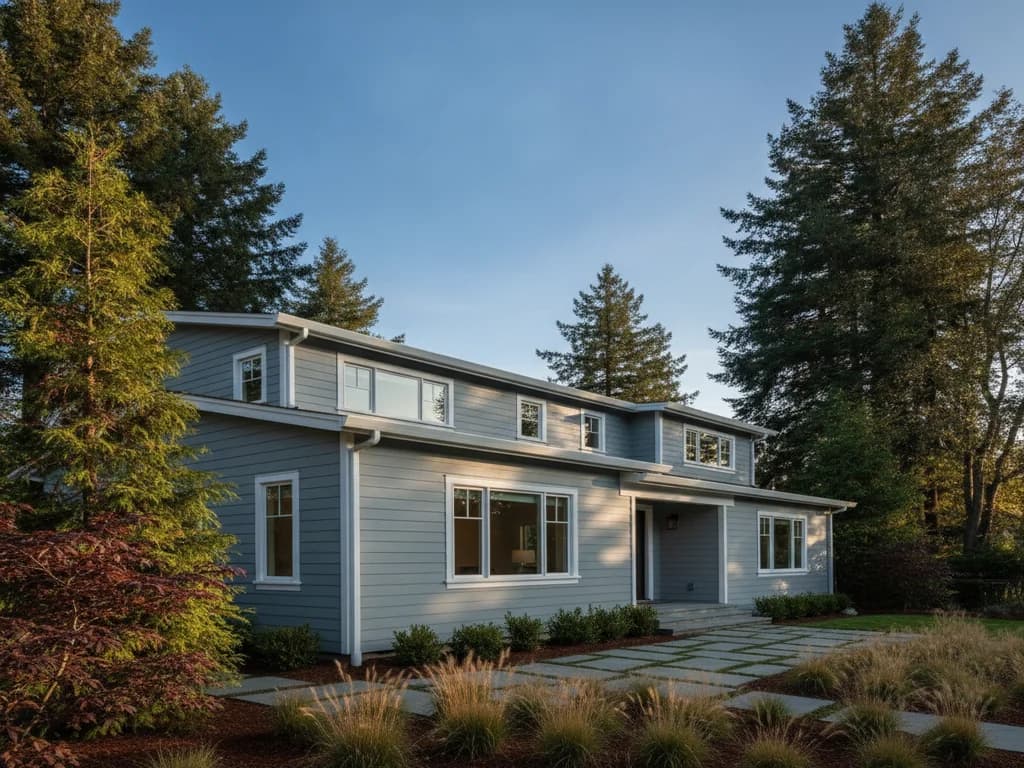
Felida, like neighboring Ridgefield, is a predominantly newer community — most of its housing was built from the 1990s through the 2010s in master-planned subdivisions near Salmon Creek Regional Park, with open floor plans and builder-grade finishes. Because Felida is unincorporated, permits are issued by Clark County, and most of our work here is upgrading builder-grade kitchens and baths to better finishes, along with room additions as families grow into their homes.
From Felida and Salmon Creek Regional Park area to the rest of Felida, we match every dry rot & siding repair project to the age, construction, and condition of your specific home rather than a one-size-fits-all spec.
- County
- Clark County
- Permitting authority
- Clark County — Community Development (Felida is unincorporated)
- Elevation
- 174 ftCopernicus DEM GLO-90 at the city center
- Annual precipitation
- 40.6 inPRISM 1991-2020 normals, 800 m grid at the city center
- Measurable-rain days
- 103 days/yrDays with at least 0.10 in — NOAA 1991-2020, VANCOUVER 4 NNE, 4.5 mi
- Climate zone
- Marine 4CWashington State Energy Code climate zone
- Moisture-source investigation before any repair begins
- Dry-rot and water-damaged sheathing and framing repair
- Rain-screen re-siding to let the wall drain and dry
- Flashing correction at windows, doors, and roof-to-wall intersections
- Deck-ledger flashing and connection repair (a common leak point)
- Siding, trim, and fascia replacement over repaired framing
- Structural-grade lumber and moisture-resistant sheathing replacement
- Soffit vent correction to reduce attic and eave moisture
- Localized spot repair or full wall-section reconstruction
- Documentation of repairs and photos of what was found
- 01
Moisture Investigation
We start by finding the actual water source — not just the visible damage. That means tracing flashing, siding laps, deck-ledger connections, and grade/drainage around the foundation before we scope any repair.
- 02
Open-Up & Assessment
We open the affected wall or trim area to see the full extent of the rot and confirm how far it's spread through the sheathing and framing, then document what we find with photos before pricing the repair.
- 03
Structural Repair
Damaged framing and sheathing are cut back to sound wood and replaced with new, properly protected lumber. We don't patch over rot — anything soft or compromised comes out.
- 04
Correct the Moisture Path
We install proper flashing, a rain-screen gap, and correct drainage detailing at the source of the original leak, so the rebuilt wall doesn't fail the same way again.
- 05
Re-Siding & Finish
New siding, trim, and paint or stain finish the repair to match the surrounding exterior, and we walk the completed work with you.
Typical timeline: Varies by scope and extent of damage. We provide a written schedule after assessing your Felida home.
Permit requirements for dry rot & siding repair in Felida are handled through Clark County — Community Development (Felida is unincorporated). Because Washington building rules — including the Washington State Energy Code and local amendments — vary from one jurisdiction to the next, we confirm what your specific address requires and pull the permits and schedule the inspections the scope calls for.
- Building permits are required for structural, electrical, plumbing, and mechanical work and are issued by Clark County, not a city
- New construction and most remodels must meet the Washington State Energy Code (WSEC)
- Accessory dwelling units are governed by Washington's statewide ADU law (HB 1337) and county standards — we prepare and submit all applications
Get Your Free Dry Rot & Siding Repair Estimate in Felida
Free, no-obligation in-home consultation across Clark County — we respond within one business day with a fixed-price proposal.
How do I know if I have dry rot?
Common signs are soft or spongy trim and siding, paint that's bubbling or peeling in one spot, a musty smell near an exterior wall, or discoloration around a window, deck ledger, or roofline. Dry rot often starts hidden behind siding, so by the time it's visible from outside it's usually been developing for a while. If you're seeing any of these signs, it's worth having it assessed before it spreads further.
What usually causes dry rot in Southwest Washington homes?
Almost always a failure somewhere in the moisture path — missing or corroded flashing, siding installed without a rain-screen gap so it traps water against the sheathing, a deck ledger that was never properly flashed where it meets the house, or a soffit vent that lets moisture build up in an eave. Our long, wet season means any one of those gaps has months to do damage every year.
Do you just patch the damaged area, or fix what caused it?
Both, and in that order — we can't do one without the other. Rebuilding a rotted wall without correcting the flashing or drainage that let water in just sets up the same failure again. Every repair includes finding and correcting the actual moisture source, not just replacing the wood you can see.
Is dry rot repair urgent, or can it wait?
It's worth addressing promptly. Dry rot spreads as long as the moisture source stays active, and what starts as a soft trim board can migrate into structural framing, sheathing, and eventually the wall's ability to carry load. Catching it early is almost always a smaller, less invasive repair than waiting.
Can this be done alongside a re-side or deck project?
Yes, and it often should be. A re-side is the natural time to correct flashing and add a rain-screen gap across the whole wall; a deck rebuild is the time to properly flash the ledger connection. We coordinate rot repair with those projects so you're not paying to open the same wall twice.
Do I need a permit for dry rot & siding repair in Felida?
It depends on the scope. Clark County — Community Development (Felida is unincorporated) sets the requirements for Felida, and they can differ from neighboring Washington jurisdictions. We confirm what your project needs before we start and handle the permit and inspection process as part of the job.
Do you handle dry rot & siding repair on both older and newer Felida homes?
Yes. From Felida and Salmon Creek Regional Park area to the rest of Felida, Felida in Clark County spans a range of housing eras and construction types, and we tailor the dry rot & siding repair plan to the age and condition of your specific home rather than a one-size-fits-all template.
How does Felida's weather affect dry rot & siding repair?
Felida averages about 40.6 inches of precipitation a year in PRISM's 1991-2020 climate normals. NOAA's station at VANCOUVER 4 NNE, 4.5 miles away, records about 103 measurable-rain days a year over the same 1991-2020 period. That is the constraint every detail on a dry rot & siding repair project has to answer to: assemblies need a drainage path and the ability to dry, and exterior stages get scheduled around the weather rather than against it. We plan the sequence so nothing is left open to the rain.
What should Felida homeowners know before starting dry rot & siding repair?
Two things specific to Felida. First, permits run through Clark County — Community Development (Felida is unincorporated), whose requirements differ from neighboring Washington jurisdictions — we confirm what your address needs before work starts. Second, Felida sits at roughly 174 feet, and local drainage and exposure vary enough street to street that we assess your specific lot rather than assuming. Both feed into the written scope and schedule you get before we start.
Ready to Start Your Remodeling Project?
Get a free, no-obligation estimate from Southwest Washington's remodeling and exterior specialists. Licensed, insured, and ready to build.